
UK Skilled Worker Visa Changes 2025: Key Updates from the Government’s Immigration White Paper
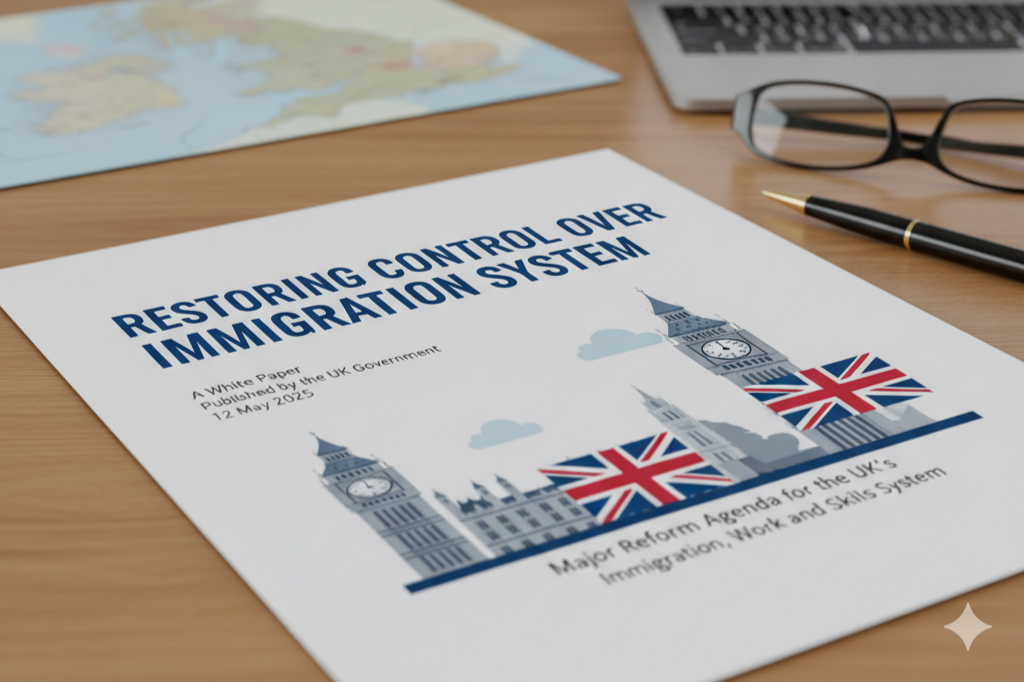
On 12 May 2025 the UK Government published its White Paper “Restoring Control over the Immigration System”, setting out a major reform agenda for the UK’s immigration, work and skills system.
Among the most-impactful elements are changes proposed to the Skilled Worker route — a core work-visa regime that allows overseas nationals to come to the UK to fill skilled jobs sponsored by UK employers.
These changes reflect a shift in policy: less reliance on recruiting from overseas, and more emphasis on domestic skills, higher thresholds and stricter criteria. In this blog we’ll zoom in specifically on what’s changing for the Skilled Worker route: what remains, what’s changing, timelines, implications for employers and migrant workers, and what action to consider.
What’s being changed for the Skilled Worker route
Here are the key proposed changes (some already in motion) under the White Paper, specifically affecting the Skilled Worker visa:
1. Higher skill threshold (RQF 6)
One of the most significant changes: the minimum required skill level for a role eligible under the Skilled Worker visa is proposed to rise from RQF 3 (roughly A-level equivalent) to RQF 6 (Bachelor’s degree or equivalent). This effectively means that many roles which today attract Skilled Worker sponsorship (i.e., lower-skilled roles) will no longer qualify, unless they meet certain exemption criteria (see below).
For employers and workers this is a major shift: it reduces the number of eligible roles for overseas sponsorship under this route.
2. Abolition of the Immigration Salary List / Temporary Shortage List
The existing “Immigration Salary List” (which permitted discounted salary rates for certain shortage occupations) is to be abolished. A new framework called the “Temporary Shortage List” will replace it, with tighter rules.
Under this new regime, jobs below RQF 6 may only be eligible under the Skilled Worker route if they appear on the Temporary Shortage List — and then only on a time-limited basis, and where the relevant sector has a credible workforce strategy and domestic recruitment efforts.
Put simply: lower-skilled roles will face more stringent controls if overseas recruitment is to be used.
3. Increased salary thresholds & costs to employers
Because of the higher skill threshold, the minimum salary for the route is set to increase.
In addition, the “Immigration Skills Charge” (the fee employers pay when sponsoring a worker) is to increase by 32% — a significant cost rise for sponsoring employers.
4. Stronger workforce / domestic skills emphasis
The White Paper emphasises that for roles below the new higher threshold, the expectation is that UK domestic labour should be developed, trained and used.
Employers with high levels of overseas recruitment may need to demonstrate domestic workforce strategies.
5. Transitional arrangements & exempt current visa-holders
The White Paper indicates that current Skilled Worker visa holders will continue to be covered by the rules in place when their visa was granted. This means they should be able to extend, renew, or change employers under the existing criteria, rather than immediately being subject to the new, higher thresholds.
However, new applicants — and those applying for roles under newly issued sponsorship certificates — will be assessed against the updated skill and salary requirements once the reforms take effect.
6. Timetable / Implementation
While not all changes have fixed dates, some key timings to note:
The job list reduction (for Skilled Worker eligibility) came into effect 22 July 2025 for initial reduction in eligible occupations.
Some increases (salary, skills thresholds) are tied to legislation and will phase in.
It’s expected that full reforms will roll out over 2025–2026.
Employers and migrants should monitor for regulations and guidance when they are laid.
7. Settlement / Indefinite Leave to Remain (ILR) changes
Although not exclusively a Skilled Worker route change, one major linked change: the standard qualifying period for settlement (ILR) under Points Based System routes (including Skilled Worker) may be extended from 5 years to 10 years.
There will be a concept of “earned settlement” where people who make stronger economic or societal contributions may reduce that period, but details are still to come.
At this stage, it has not been confirmed whether the new ten-year settlement requirement will apply to existing Skilled Worker visa holders or only to new applicants once the changes take effect. The available policy papers and the July 2025 Explanatory Memorandum do not specify transitional protections for this measure.
8. English language requirements
Again, while broader than just Skilled Worker, the White Paper indicates that for work immigration categories (including Skilled Worker) English language requirements will tighten (for example from B1 to B2 level of the Common European Framework of Reference (CEFR).
In addition, the government will introduce an English language requirement for all adult dependants of migrant workers. This aims to encourage stronger integration and ensure that accompanying family members can participate more fully in UK life and the workforce.
However, the White Paper and accompanying documents do not yet confirm whether these enhanced requirements will apply to individuals who already hold a Skilled Worker visa or to dependants currently in the UK under existing rules. Implementation details — including any transitional arrangements — are expected to be outlined in future immigration rule changes.
Conclusion
These reforms mark a return to a more selective and controlled Skilled Worker visa system. For those planning to apply or employ under this route, understanding these changes is crucial for compliance and successful visa sponsorship.
YourFutureVisa.net is here to provide clear, experienced guidance through this evolving immigration landscape so you can navigate the Skilled Worker visa process confidently.
